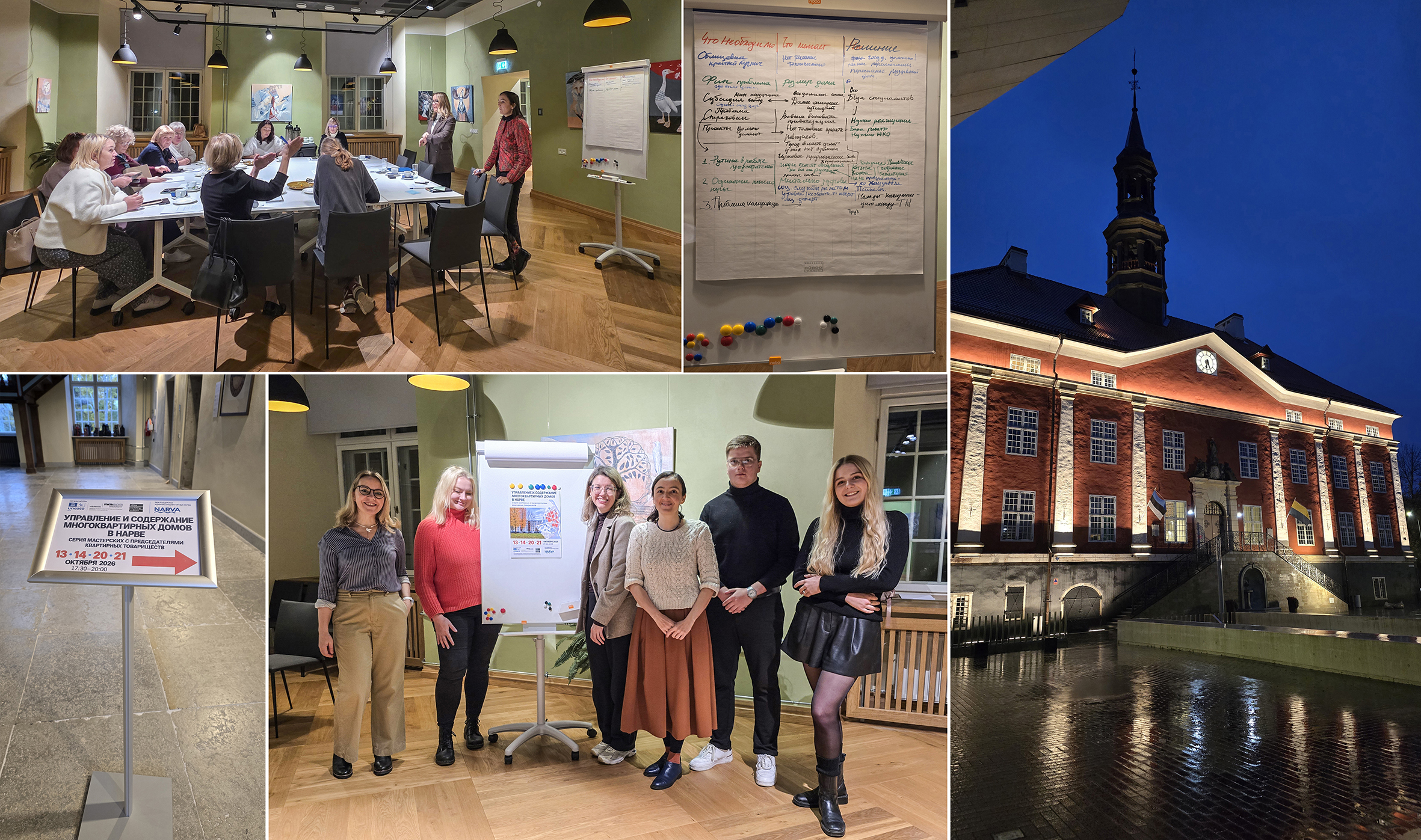





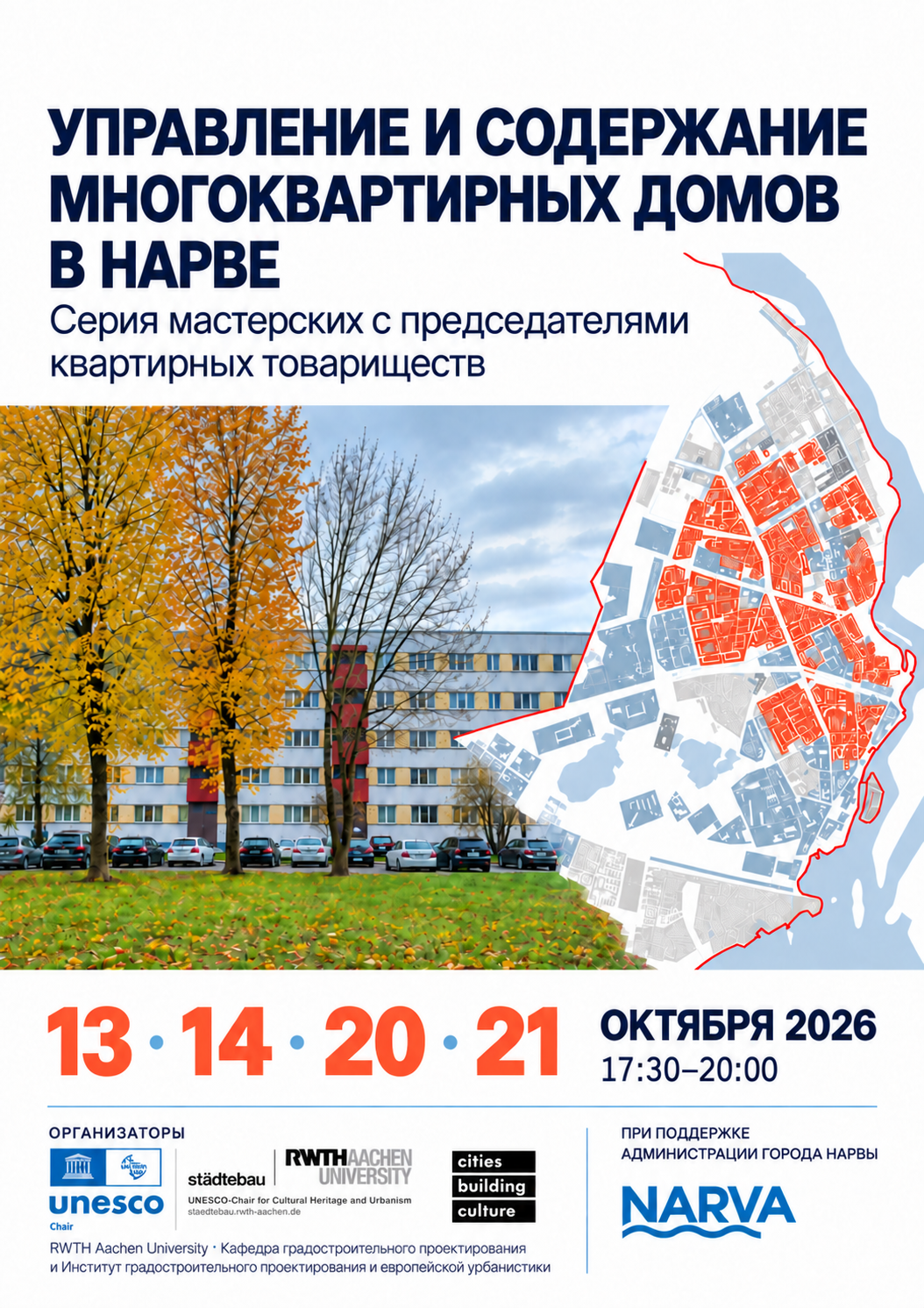
On 13, 14, 20 and 21 October 2026, Dr Elena Batunova and Albina Davletshina from RWTH Aachen University organised four workshops in Narva, Estonia, in close cooperation with the Narva City Government. Held at the historic Narva Town Hall, the events brought together approximately 40 participants, primarily chairpersons and active members of apartment associations. The workshops marked an important milestone in the international research project CITIES. BUILDING. CULTURE., advancing its objective of developing integrated approaches to urban challenges through policy co-production.
Policy co-production is a central component of the project's research approach. It involves bringing together academic knowledge, local experience and institutional perspectives to identify shared challenges and explore possible responses. In Narva, the RWTH Aachen team applied this approach to the long-term management and sustainability of Soviet-era apartment housing, building on extensive fieldwork, interviews and cooperation with local stakeholders.
Narva provides a particularly relevant setting for this work. Following the privatisation of Soviet-era housing, responsibility for building management and maintenance shifted to apartment owners and their associations. Today, these associations must navigate ageing buildings, renovation needs, limited financial resources and demographic change. Their capacity to address these challenges is shaped by wider institutional and economic conditions, raising important questions about the distribution of responsibilities between residents, municipalities and national authorities.
The research team developed a participatory workshop format combining individual building questionnaires, structured group discussions and exchanges between representatives of different apartment associations. Participants examined the condition and maintenance histories of their buildings, discussed collective decision-making and identified challenges requiring cooperation or external support. The four workshops brought together experiences from a diverse range of residential buildings and provided an opportunity to examine how broader urban challenges are experienced and managed at the building level.
The discussions were exceptionally active, with each workshop continuing beyond its scheduled time. A recurring theme was the need for stronger communication and cooperation between apartment associations. Participants repeatedly highlighted the importance of sharing practical knowledge and expressed interest in regular opportunities for exchange. These discussions also generated insights into the conditions that may enable or constrain collective action and cooperation with public institutions.
The successful partnership with Narva City Government was essential to implementing this research initiative and connecting the project with local practice. The RWTH Aachen team is now analysing the workshop materials and preparing a synthesis of the findings for participating associations and the municipal administration. The results will also inform the project's comparative research across Narva, Daugavpils (Latvia) and Gyumri (Armenia), contributing to a broader understanding of housing governance and integrated urban action in post-socialist cities.