





The international conference “Modernism Revisited: Typology – Topography – Strategy”, held from October 21 to 23, 2026, at ODA Trenčín, Slovakia, brought together researchers, architects, urban planners, and heritage professionals to explore the legacy of Modernism and its relevance to contemporary architectural and urban challenges.
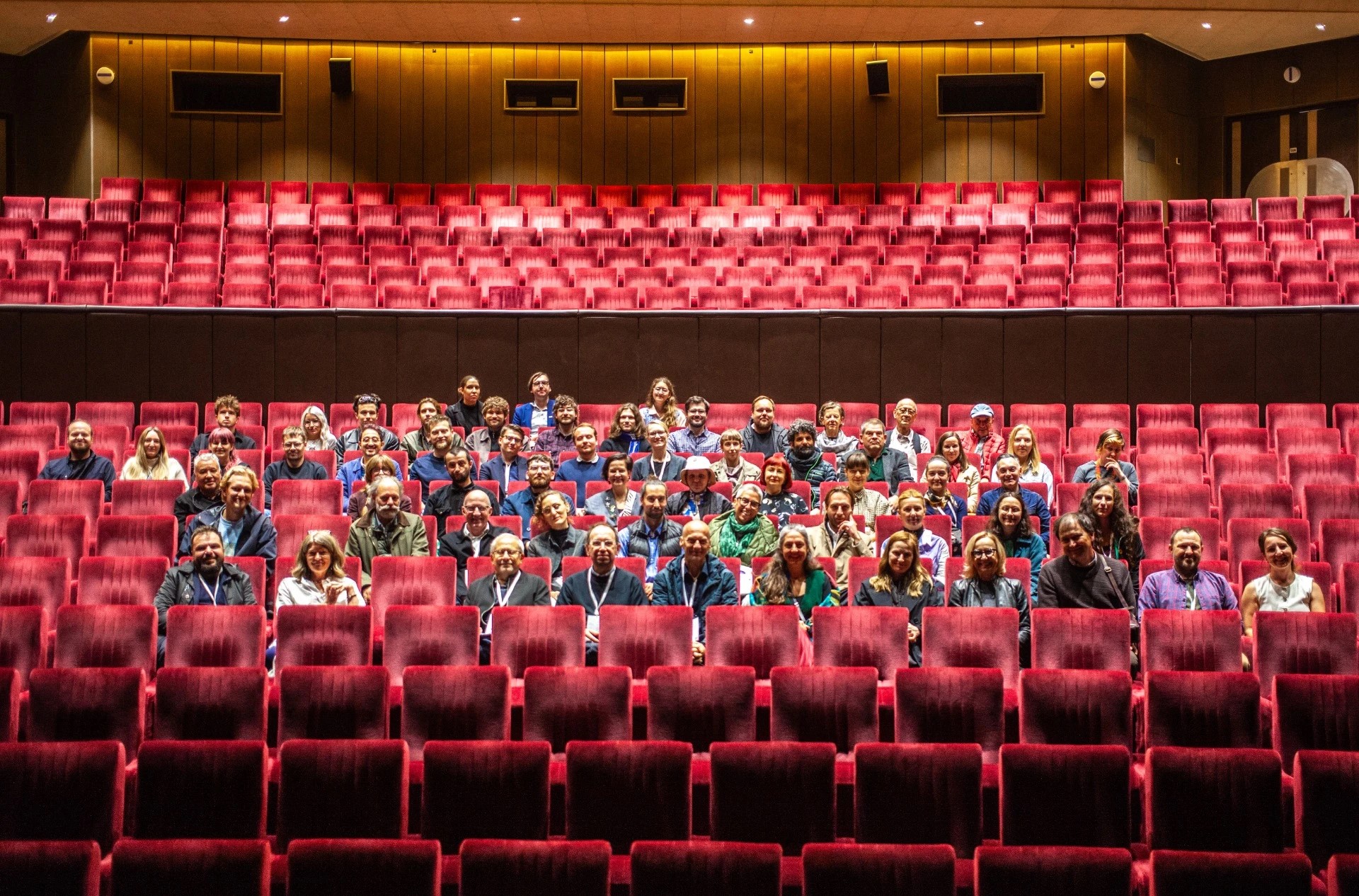
Pic. 1. Participants of the Modernism Revisited: Typology – Topography – Strategy 2026 Conference. Photo by Andrea Kalinová, 2026
Organized by the Jaromír Krejcar Society and the ETOM NEB Lab in partnership with DOCOMOMO Slovakia, under the auspices of DOCOMOMO International and the Slovak Chamber of Architects, the conference formed part of the official programme of the European Capital of Culture Trenčín 2026. Discussions focused on three interconnected themes — Typology, Topography, and Strategy — examining how modernist architecture, urban environments, and planning concepts can be reinterpreted and transformed in response to contemporary social, environmental, and spatial challenges.
The cities.building.culture research project contributed to the thematic session Housing with two presentations addressing the planning principles and ongoing transformation of socialist-era residential environments.
Anastasiia Bozhenko, researcher in Subproject 1 Reevaluation and Reconstruction (GWZO), presented the paper “Planning Saltivka: Standardization and the Organization of Everyday Life.” The contribution examined the relationship between standardized urban planning and the organization of everyday life in Saltivka, a large-scale Soviet housing district in Kharkiv, Ukraine.
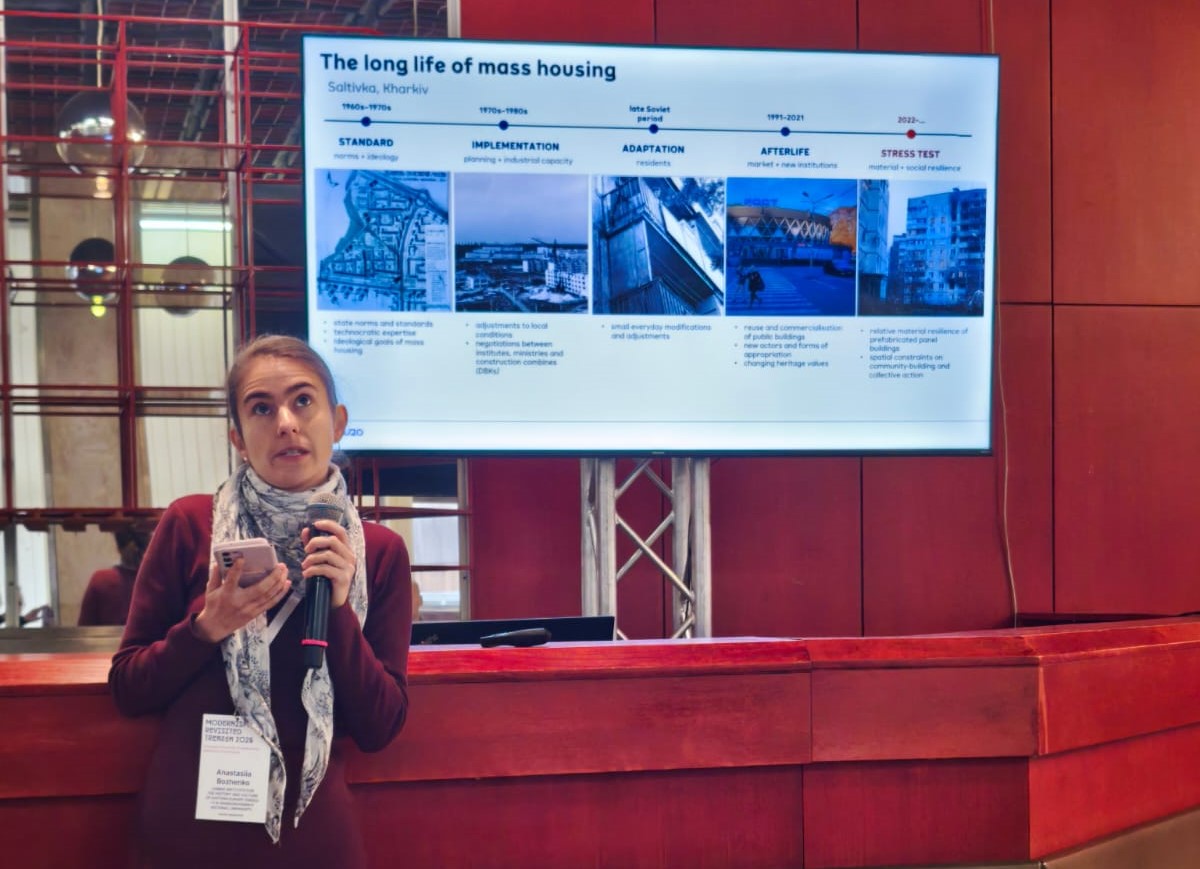
Pic. 2. Presentation by Anastasiia Bozhenko. Photo by Ekaterina Gladkova, 2026
Ekaterina Gladkova, researcher in Subproject 3 Urban Spatial Transformations (KIT), presented the joint paper “Typologies and Transformation of Open Spaces in Large Housing Estates. The Green Superblock in Tbilisi,” co-authored with Barbara Engel and Nikolas Rogge. The contribution explored the spatial typologies of open spaces in Soviet-era large housing estates and their transformation, focusing on the Green Superblock in Tbilisi as a case study.
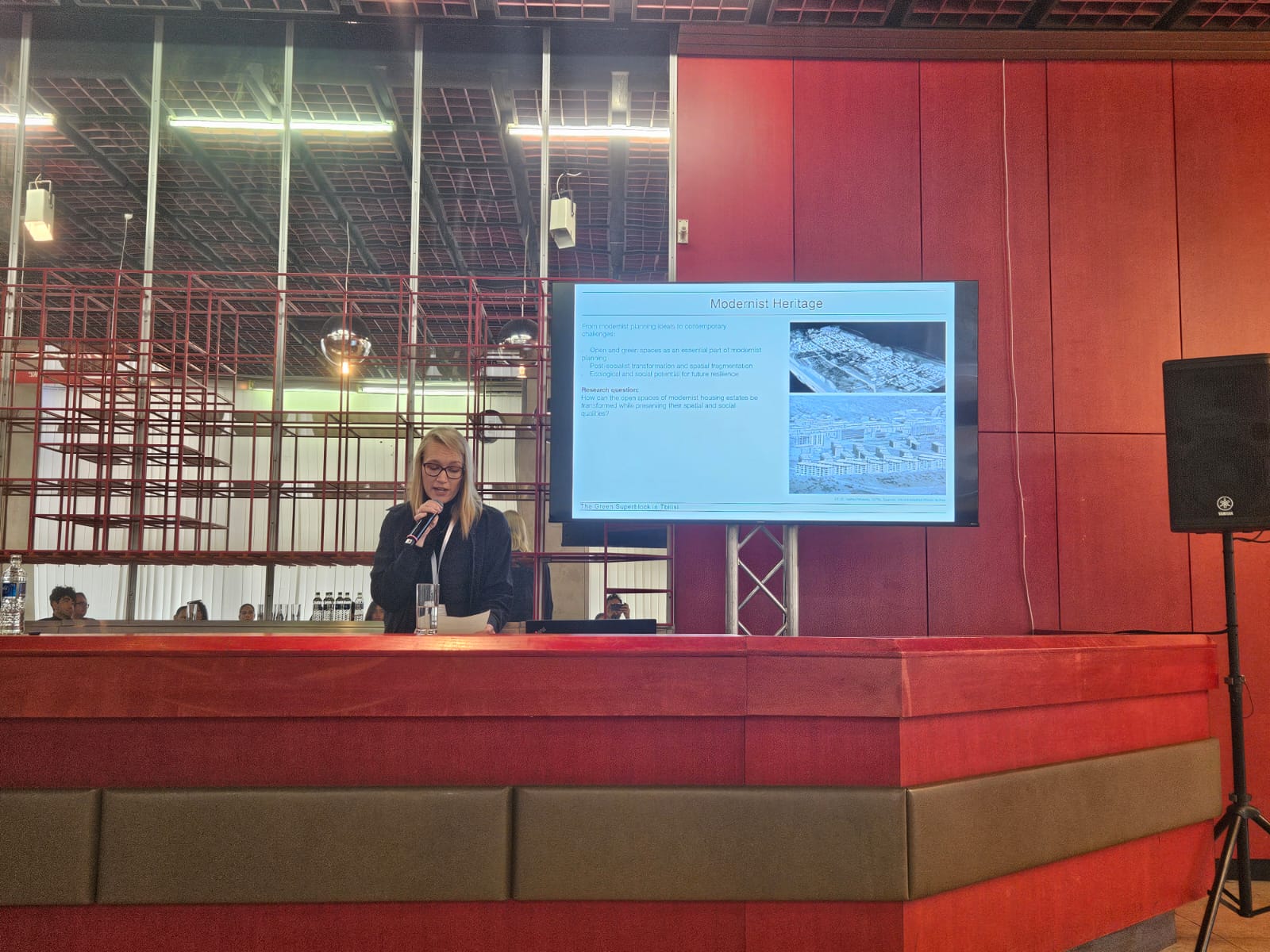
Pic. 3. Presentation by Ekaterina Gladkova. Photo by Anastasiia Bozhenko, 2026
Both papers will be published in the forthcoming conference proceedings.
The conference provided an opportunity to connect the research of cities.building.culture with broader international discussions on modernist heritage. The two contributions highlighted the importance of examining large housing estates not only as architectural and planning legacies, but also as living urban environments shaped by changing social practices, spatial transformations, and contemporary challenges.
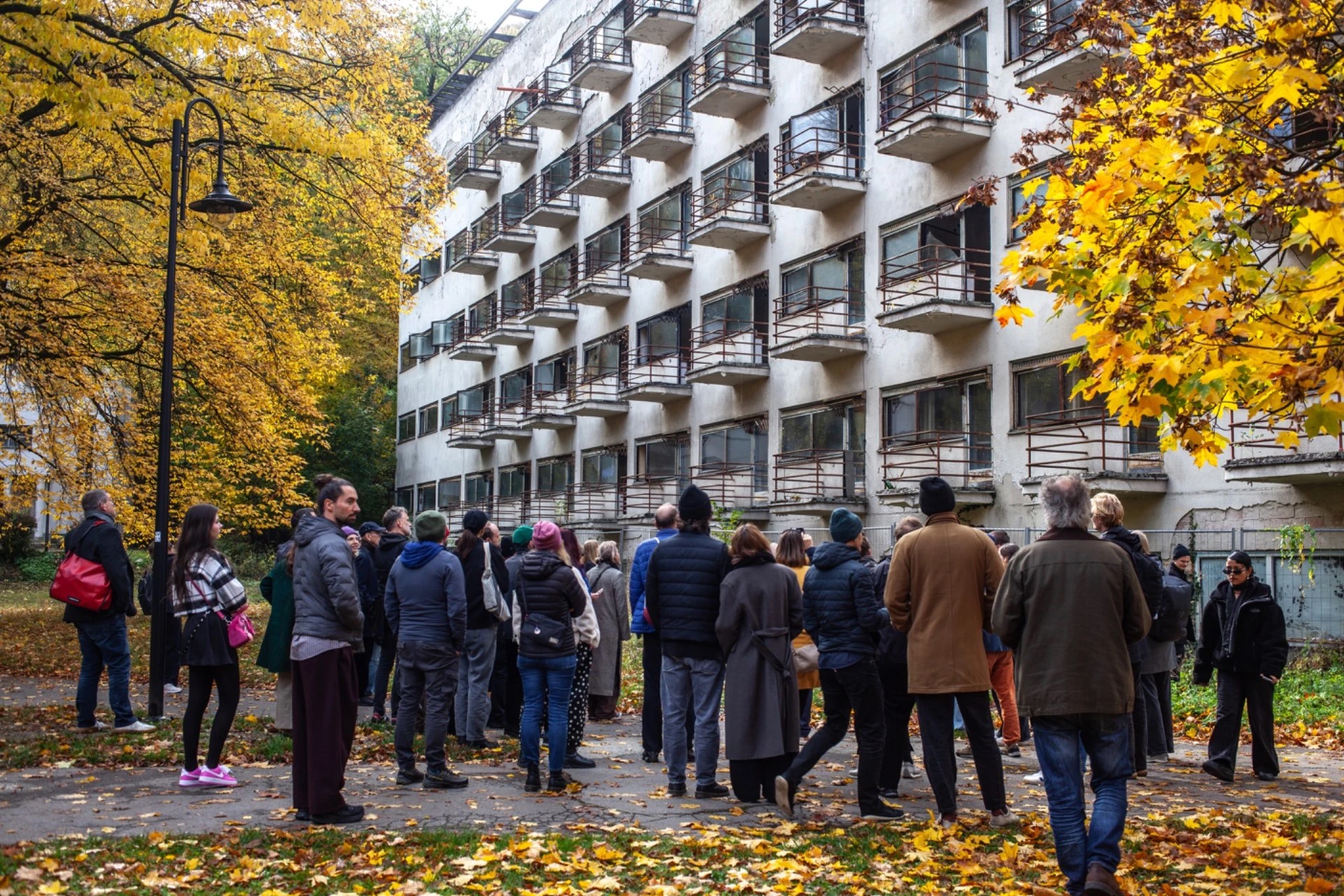
Pic. 3. Guided Tour of the Machnáč Sanatorium. Photo by Andrea Kalinová, 2026
See more info here:
https://www.modernismrevisited2026.com/