





Empirical Reflections from CBC
By CBC team
Urban resilience takes many forms across a city. It can be seen in how people adapt during wartime, in the daily work of keeping up homes, in decisions made by local leaders, and in the gradual changes of neighbourhoods that are shrinking or evolving. This essay, from the “Cities.Building.Culture” project, brings together seven viewpoints on resilience, written by members of our research team. Each of us adds our own voice to the project, building on a shared discussion but grounded in our individual research experiences. Instead of offering a single definition, the following texts trace resilience through everyday life, local decisions, and the inherited housing and urban fabric of historically layered cities.
***
Odesa’s Resilience: How People Shape Social Space
by Anastasia Malko
Through my interviews with architects and urban planners in Odesa, I realised that resilience here emerges primarily through grassroots initiatives. Residents, students, and local activists adapt the city themselves: converting basements into shelters, refurbishing courtyards, creating memorials, and carving out spaces for social interaction. These actions struck me because resilience is not produced through plans or strategies alone—it lives in people’s everyday practices, their knowledge of streets, experiences of past attacks, and collective memory of trauma.
Soviet-era housing remains both a resource and a vulnerability: panel buildings are fragile yet form the backbone of local rehabilitation and social adaptation. In older residential areas near factories and dormitories, interviewees explained how work, everyday infrastructure, and informal social points help shape living environments that support communities during crises.
It is clear to me that grassroots initiatives and social rehabilitation go hand in hand with longer-term strategies. Creating safe and supportive spaces enables people to cope with trauma, build new social connections, and gradually renew the urban fabric. Odesa’s resilience, I find, exists across a spectrum—where daily improvisation and people-centred projects keep the city alive, adaptable, and deeply human.
Resilience in Ukrainian Frontline Cities
by Anastasiia Bozhenko
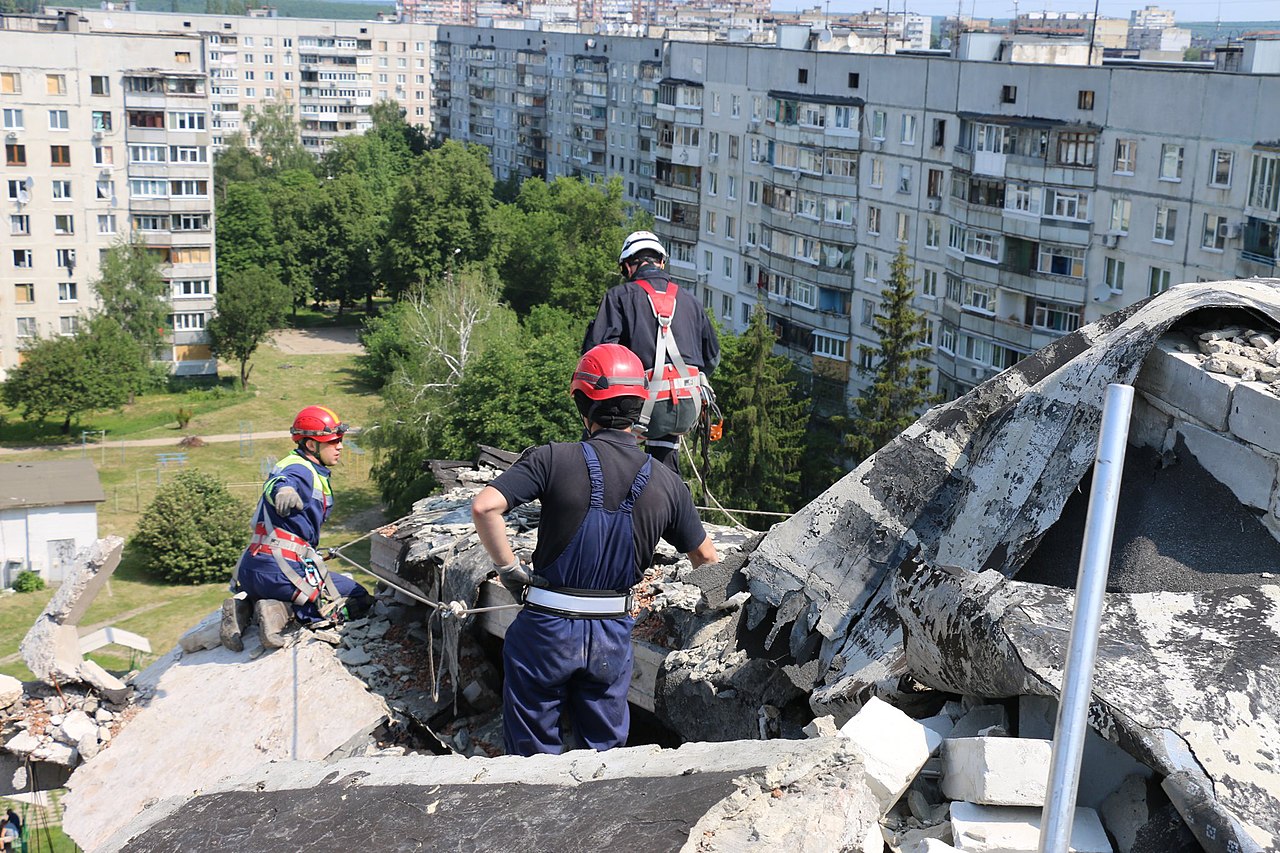
In frontline Ukrainian cities, such as Kharkiv and Zaporizhzhia, for example, during the full-scale invasion of the Russian Federation, resilience has shifted from an abstract policy concept to a lived urban condition. Within critical heritage studies, this perspective highlights the role of existing urban environments not only as objects of preservation but as active frameworks that support social continuity under conditions of war.
In the context of Ukrainian rebuilding, resilience is also shaped by public and media discourses. Since the invasion began, the term has taken on strong symbolic resonance, alongside ideas of resistance and unbreakability. At the same time, scholars increasingly emphasise the plurality of resilience, reflecting its uneven and situational character across different urban and social contexts.
In practice, this plurality is visible in forms of civic mobilisation that extend beyond formal institutional responses. These include support networks for displaced populations, mutual aid structures, and grassroots urban initiatives that reassert residents’ claims to urban space. Such practices suggest that resilience should be understood not as a fixed community trait but as a dynamic, processual capacity shaped by material infrastructures, social relations, and shared experiences of crisis.
Bottom-Up and Top-Down Paths to Resilience
by Ekaterina Gladkova
Comparing Tbilisi (Georgia) and Tallinn (Estonia), as cases from the Caucasus and the Baltic regions reveals two contrasting models of heritage resilience, shaped by distinct political, institutional, and social trajectories.
In Tbilisi, resilience is primarily produced through bottom-up practices. Residents of mass housing neighbourhoods actively adapt buildings constructed in the 1960s–70s, responding to poor energy performance, economic instability, and limited institutional support. Informal extensions, functional transformations, and collective self-organisation compensate for the lack of coordinated renovation policies. This form of resilience prioritises immediate liveability and social survival but often undermines long-term sustainability by increasing structural risks and environmental vulnerability.
In Tallinn, resilience follows a predominantly top-down logic. The same generation of housing stock faces similar challenges of energy inefficiency and ageing infrastructure, yet responses are mediated through municipal programs, housing associations, and EU-supported frameworks. This model enhances sustainability through standardised, long-term solutions, but can weaken everyday adaptability and exclude residents who face linguistic or social barriers.
These cases demonstrate that resilience and sustainability are not synonymous. In Tbilisi, socially resilient practices may be environmentally and structurally unsustainable, while in Tallinn, sustainable technical solutions may limit social resilience and agency. Long-term urban resilience, therefore, cannot rely only on either bottom-up or top-down interventions. It requires continuous dialogue among residents, institutions, and experts, integrating local knowledge with strategic planning to balance adaptability, safety, and sustainability across diverse regional contexts.
Governance in Residential Heritage Resilience
by Elena Batunova
When I think about the resilience of residential heritage, I consider resources, infrastructure, and adaptability as key factors. However, it is even more important to examine who manages these resources and capacities, how they do so, and for what purpose.
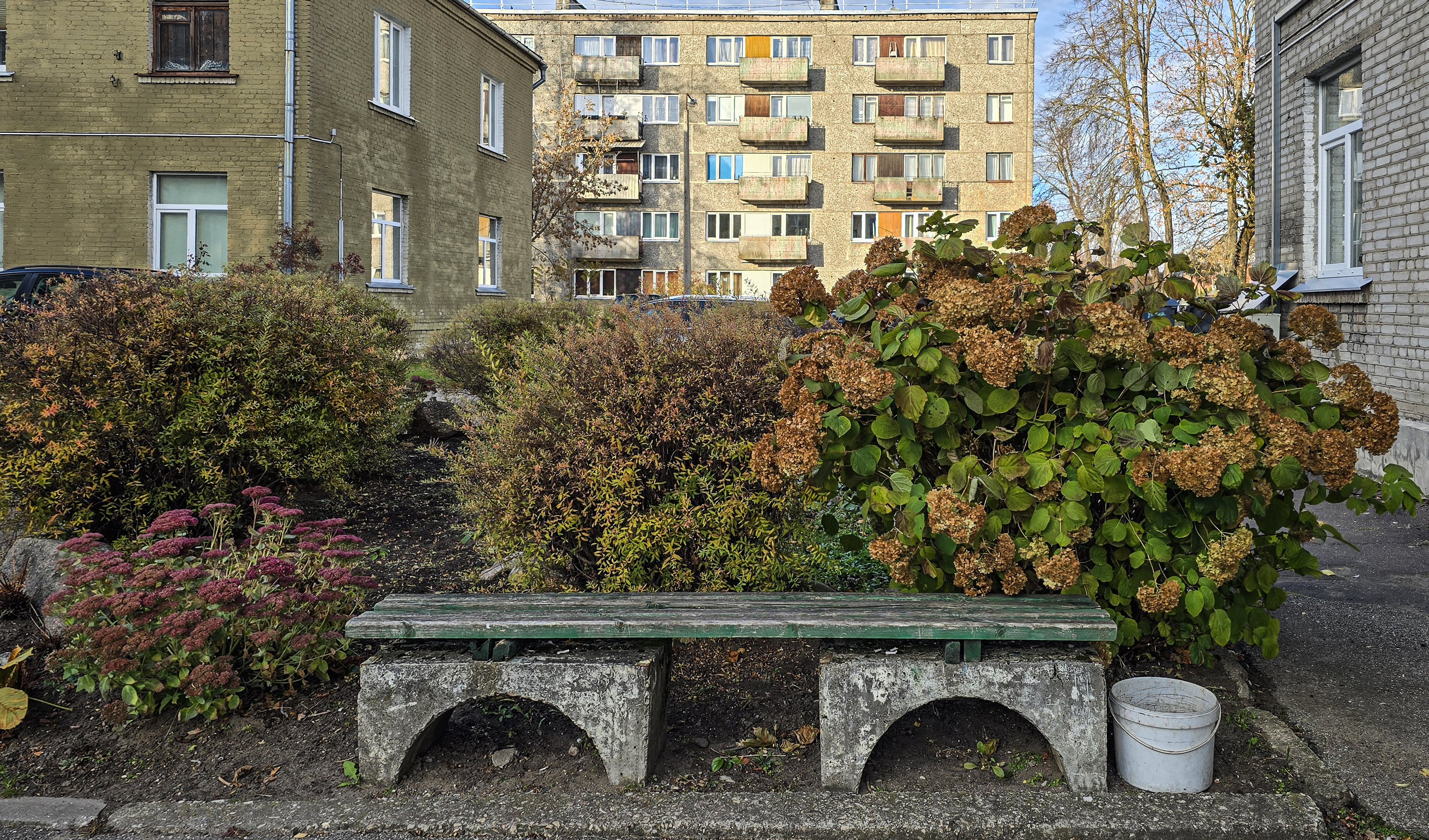
I see this perspective on housing resilience as particularly relevant for post-Soviet cities, where governance continues to depend on national programs and standard solutions despite widespread private ownership. The Soviet state built and managed apartment blocks as shared assets, but after privatisation, these buildings were often handed over to individual owners in poor condition, with limited resources. Many residents could not afford to make improvements or work together. Because of this, public programs, including national and international initiatives, often become the primary means of improving housing. Still, these programs usually follow strict rules and standard models, so they do not take local factors such as economic decline, depopulation, or ageing into account. Meanwhile, many residents spend their own time and effort caring for their homes in everyday ways.
In my view, what matters most for the resilience of residential heritage is having governance that connects public support with local capacities, local conditions, and the daily ways people already look after their homes.
Resilience when Change is Slow
by Marina Sapunova
In an age of rapid technological innovation, where new products and platforms emerge constantly, how exhausting it is to wait for change measured in decades.
Well over a generation after the Soviet collapse, as countries that had been Soviet republics underwent rapid privatisation of assets, industries, housing, and urban infrastructure, many cities remain dotted with the remnants of Soviet industrialisation. Transforming these territories often exceeds municipal capacities and resources, requiring incentives for diverse private owners across fragmented ownership structures, from factories and housing blocks to individual apartments, to act. These cities find themselves caught at the intersection of competing demands: inherited industrial ruins and ageing housing require investment and care yet shrinking populations and limited resources constrain what is possible. Resilience in such contexts emerges not from resolving this tension, but from learning to live within it. It demands a capacity for temporal endurance, for enduring slow transformation without abandoning the past or allowing it to paralyse the future.
What becomes visible is a form of resilience that combines quiet endurance with proactive adaptation. Communities sustain everyday life through informal care while various initiatives emerge around what can be transformed, such as businesses, cultural activities, and networks of support. In my view, this requires attending to slow, uneven change that unfolds across generations: noticing possibilities, nurturing what emerges, living with what persists.
Keeping Housing Alive
by Albina Davletshina
Words like resilience dominate housing debates, yet in the places I research, people talk about leaking roofs, unpaid repairs, rising costs, and unclear responsibilities. This gap led me to formulate a pragmatic question: how can inherited housing be sustained?
Applied to Soviet-era mass housing, this question becomes especially complex due to the abrupt transition from public ownership to individual apartment property. As the state withdrew, the day-to-day maintenance, repair, and long-term upkeep were transferred to unprepared, newly formed owners.
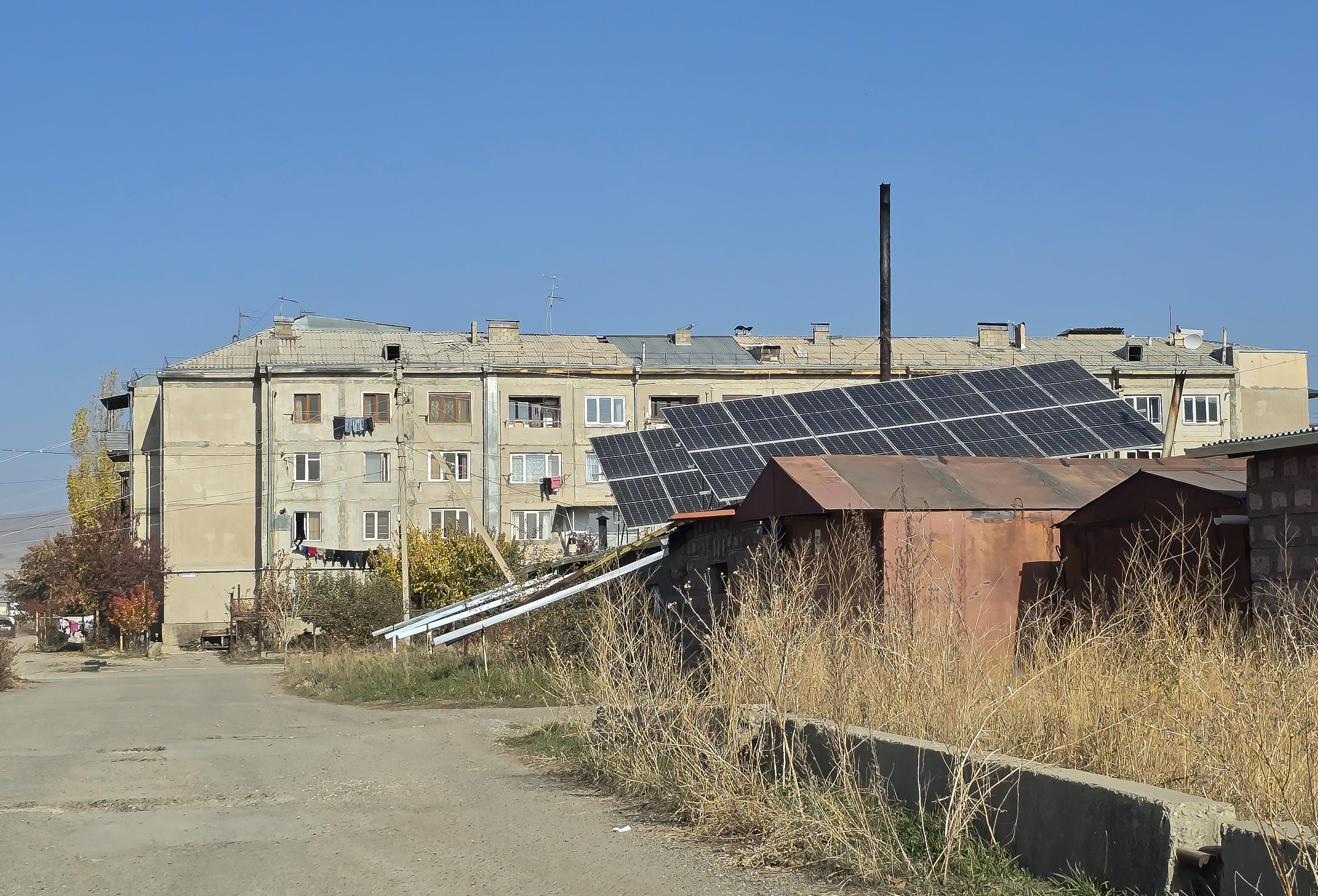
Across our three cases, a similar housing legacy persists in different ways, shaped by how institutional transitions were handled. In Daugavpils (Latvia), a centralised municipal management company continues path-dependent routines for short-term stability, but this results in low owner engagement and a limited understanding of decision-making. In Narva (Estonia), a decentralised system of homeowner associations, supported by state capacity-building mechanisms, enables collective action; however, long-term renovation is often postponed due to concerns about debt, ageing, and geopolitical uncertainty. Gyumri (Armenia) presents the most fragile case: a top-down condominium model was introduced into a housing landscape damaged by an earthquake, without the tools for community capacity-building. Housing here survives largely through individual improvisation.
These cases show that keeping housing alive depends on institutional capacity to structure governance processes and support mechanisms of care, rather than leaving owners to cope alone.
Retreat into the Ordinary - Resilience in Atomic Cities
by Liliana Iuga
Atomic cities—in fact, small towns built to support nuclear energy programs, particularly during the Cold War—offer quite sharp lenses for observing different facets of resilience. In these small, often isolated places, conceived as model settlements with generous infrastructure and extensive green space, residents had to adapt from the beginning to living with a high level of technological risk. Danger became normalised (or ignored) and was accepted as an ordinary part of everyday life.
When nuclear facilities were closed, these communities experienced a dramatic shift. Towns that had once enjoyed privileged positions in the national economy due to their high levels of professional specialisation suddenly faced uncertainty. Suddenly, a project that had provided the community with social status and a sense of cohesion disappeared.
Still, atomic cities retained important resources that mitigated the negative impact of deindustrialisation. Many had well-preserved infrastructure, green spaces, and a “spirit of place” expressed through local pride and nostalgia. Some of the local professionals, highly qualified, sought to redefine their roles, either in local administration, tourism or the development of new industries.
For most residents, resilience manifested in simple, everyday practices, such as caring for their homes and gardens. Many focused on transforming their homes in line with their financial capabilities and aesthetic preferences. At the same time, younger generations would like to move to places that offer more opportunities. Overall, retreating into the ordinary—by framing the town as unexceptional, as a place where “there is nothing special”—appears to be one of the most common strategies for overcoming the moment of rupture between past privilege and current uncertainty.
***
Overall, these reflections point to a common lesson: cities are not inherently resilient, and programs alone usually do not create resilience. Urban life depends on people’s daily care, improvisation, and small maintenance efforts, while government decisions influence which abilities can develop and which are held back. For the “Cities.Building.Culture” project, the main challenge is to connect these different levels by designing flexible, locally based approaches that support everyday actions and help coordinate public investment over time in cities that are already lived in and shaped by history.